Exploring Naturalist: A Multi-Purpose Presentation Template
You’ve got a killer idea, a business plan that’s finally coming together, or a school project that needs to stand out from the stack. But staring at a blank slide deck? That’s where the momentum often stalls. We’ve all been there, wrestling with inconsistent layouts, mismatched fonts, and that nagging feeling that your presentation looks more like a ransom note than a professional proposal. This is precisely the gap the Naturalist presentation template is designed to fill, offering a cohesive, adaptable foundation for anyone who needs to communicate ideas visually and effectively.
A Visual Language for Modern Communication
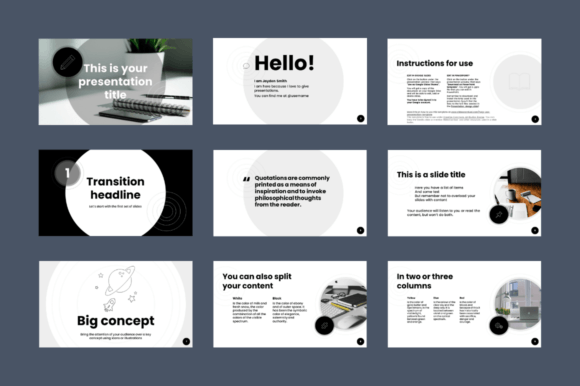
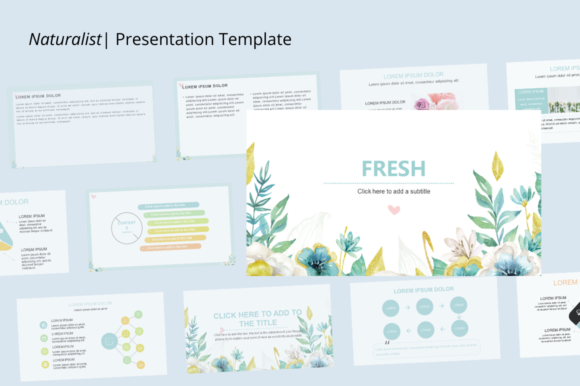
At its core, Naturalist is about clarity and adaptability. The design philosophy leans into clean lines, balanced whitespace, and a modern typography scheme that feels both professional and approachable. It’s not trying to be the loudest thing in the room; it’s aiming to be the most clear. This makes it exceptionally versatile. The aesthetic is neutral enough to serve a corporate quarterly report yet has enough personality to frame a creative agency’s portfolio or a photographer’s best work. The included 16:9 aspect ratio is the standard for modern displays and projectors, ensuring your presentation looks sharp from the boardroom to the classroom without awkward cropping or black bars.
From Business Pitches to School Projects: Real-World Applications
Think about the last time you needed to present information. For a small business owner, it might be a pitch to potential investors or a training session for new hires. For a student, it could be a thesis defense or a group project presentation. Naturalist’s structure—with its 30 slides—provides a logical flow. You’re not just getting random slide designs; you’re getting a narrative toolkit. Start with a strong title slide, move into an agenda or overview, present your data with editable charts, showcase your team or portfolio, and conclude with a clear call to action or summary. The drag-and-drop functionality for images is a genuine time-saver. Instead of fiddling with image placeholders for twenty minutes, you can have a visually compelling slide ready in under a minute. This is practical design in action, freeing up your mental energy to focus on your content and delivery rather than on technical formatting hurdles.
The applications stretch far beyond the obvious. Consider a creative agency using it to present mood boards and campaign concepts to a client. The editable shapes and color palette mean you can align the entire deck with the client’s brand identity in moments, reinforcing your professionalism and attention to detail. A photographer could use the portfolio layouts to create a stunning visual narrative for a wedding client or an art gallery submission. Even for personal use, like planning a community event or organizing a family reunion itinerary, the template provides a structured and polished way to share information that people will actually want to engage with.
Practicality Meets Customization
One of the biggest pain points with many templates is the “what you see is what you get” problem. You download a beautiful design only to find that changing the accent color requires a PhD in graphic design software. Naturalist is built with the end-user in mind. The promise of easy color changes and fully editable shapes, text, and charts isn’t just marketing speak—it’s a critical feature for anyone who needs their presentation to reflect a specific brand or personal style. This level of customization is what transforms a generic template into a personal design asset. It allows for the kind of visual consistency that strengthens brand recognition, whether that brand is your company, your personal blog, or your academic work.
The inclusion of a documentation file is another often-overlooked but vital component. It’s your guide to getting the most out of the template, reducing the learning curve to nearly zero. And for those who love to sprinkle in custom graphics, the included icon vector pack provides a head start, offering scalable graphics that won’t pixelate no matter how much you resize them. This attention to detail—from the core slides to the supporting files—creates a comprehensive toolkit rather than just a single file.
Making the Right Choice for Your Project
Choosing a presentation template is a bit like choosing an outfit for an important meeting. It needs to be appropriate for the context, comfortable enough to move in, and reflective of your personal or professional style. Before you dive in, take a moment to outline your key points. What’s the story you’re telling? Who’s your audience? Naturalist’s clean, modern style is broadly appealing, but you should always consider if its personality matches your message. A highly technical, data-driven presentation might benefit from its structured chart slides, while a more narrative, story-driven pitch might use its image-focused layouts to great effect.
Font pairing is another subtle but powerful consideration. While the template comes with a suggested typography scheme, the editable nature means you can experiment. A good rule of thumb is to pair a clean sans-serif for body text with a more distinctive serif or display font for headlines to create visual hierarchy. Test your chosen fonts at the size they’ll be displayed to ensure readability from the back of the room. The goal is seamless communication, not a typographic puzzle for your audience to solve. Ultimately, a tool like Naturalist is most valuable when it disappears into the background, allowing your ideas, your brand, and your message to take center stage with clarity and impact.